₦290bn shortfall. One clear fix.
This short report reveals the gap between teacher salary needs and what Nigeria actually budgeted—and what it means for the nation’s future.
Despite repeated calls for reform, Nigeria’s education system remains under-resourced. This report spotlights the gap, traces its impact, and outlines what can be done.
What it actually costs to pay all registered teachers
How much was allocated—and what’s missing
Links between low teacher pay and poor literacy outcomes
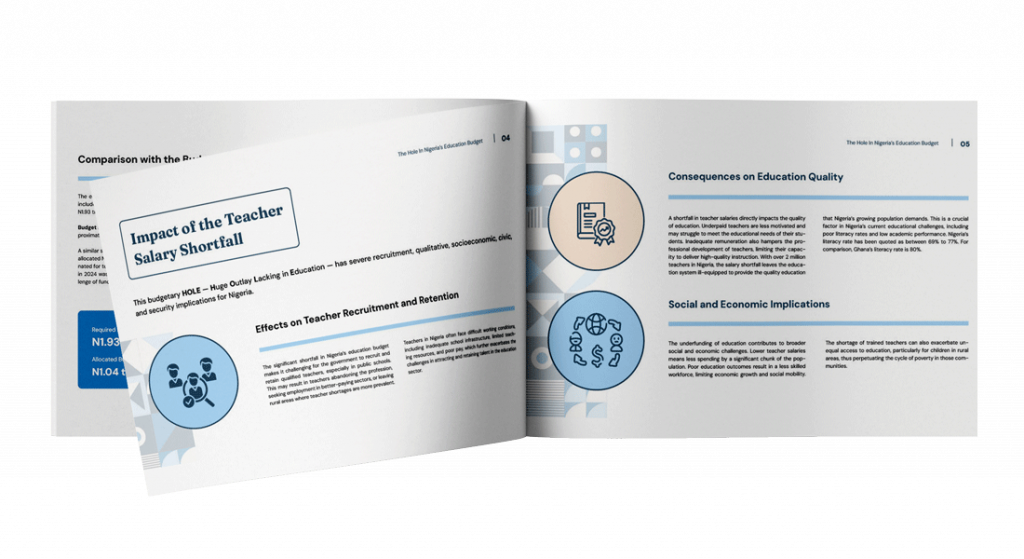
Why underfunding affects recruitment, retention, and quality
Civic and security risks of a growing illiterate population
How anti-corruption recovery efforts could help close the gap
The report traces the full scope of the gap:
2.3 million registered teachers in Nigeria
₦1.93 trillion needed for minimum wage salaries
₦1.64 trillion allocated in 2025
₦290 billion shortfall
₦277 billion recovered through anti-corruption in 2024
46.2% teacher salary gap in 2024
31% of Nigerians still lack basic literacy
It’s not just a budget issue—it’s a development risk.
Education funders working in West Africa
Policy analysts and development researchers
Civil society groups advocating for budget justice
Public sector consultants advising on reform
Think tanks and multilaterals tracking global education trends
If you work at the intersection of education, policy, or governance—this is for you.
Why do education budgets fall short year after year?
How big is Nigeria’s teacher pay gap—really?
Can anti-corruption efforts plug education funding holes?
What’s the hidden cost of underpaying teachers?
How does this affect development, literacy, and security?
Column helps leaders shape public opinion through content and research.